Search Mocavore

Friday, December 27, 2013

Cobbled-together Kimchi

Farmers Market Napa and Home-grown Daikon Greens

Late in the Fall, I finally got around to a couple of things. One was admitting that the daikon I planted was never going to make roots. Most of the summer planting bolted almost immediately, and the few plants that didn't never managed more than cracked, deformed, and undersized chunks underground. The second thing was realizing that I had a head and a half of napa cabbage yet un-used in the fridge.

So, kimchi.

There are plenty of recipes online, a suprising number of which make no sense. Some, because they are in Korean, which I do not read. Others, because they are in American, and are fake or wrong.

So I searched some more, and dredged up old emailed advice from a Korean friend of an Irish friend. This boiled down to: sweet rice flour is a good aid to fermentation, and you should use the greens you have.

Rinsing away the salt
So I stripped the greens off the straggling remnant of my failed daikon crop, a couple of stray mustard plants, and cut up the napa cabbage, then tossed it with kosher salt. Pressed out the liquid and rinsed repeatedly to get rid of (most of) the salt.

And so it begins.
Then I chopped in a mix of home-grown garlic and chilis (cayenne-ish, although NW peppers never seem to get as hot, and these were old), some store-bought dried ancho chilis (with their tobacco-raisin dimensions), and...maybe that's it. Except for the rice flour porridge, which I'm guessing is food to kick-start the microbes. Mexican anchos, Japanese rice flour, and bastard mustard may not be authentically Korean (also, I guess people used to fermenting in an onggi might look askance at my salvaged crock-pot), but somehow I imagined that using what was handy and seasonal would be acceptable to a fair proportion of Korean grandmothers, so I went with it.

The non-photogenic end result.

And before too long, I had the above. Not tongue-blisteringly hot, and oddly smoky due to the anchos, but tangy and tasty. These greens will not go bad, or be wasted. It's not bad, and that is good. It's probably even good for me. Hope so, because I've got a half gallon of the stuff. 

Sunday, December 1, 2013

Vinegar Time

Mother-floccor

Now that Stoic Week is done (in the time zones where it applied, anyway), a procrastinator like me can get around to writing about taking the world as it is. Putting things off makes sense, a lot of times. Like: I've put off writing blogs lately, getting things done, having more time with my family, playing in the real world, and dealing with the bounty of Fall.

Not that the more chore-like of these accomplishments haven't got some delay built in. I should have dealt with the garden a month ago, for instance. And the subject of today's post--vinegar--evokes among many Americans all things sour and past due. There's a Cracker song about a downer of a person, who sees "Roses and wine" as "Thorns and vinegar." I've been accused of being that person, not always without reason.

Wine, cider, and any number of fruits, however, aspire to vinegaration. Humans arrest this development for their own tipsy ends (myself included), but there's no sin in letting the process keep going a bit further (especially with headache-inducing red wine). The Acetobacter microbes feast on alcohol, and piss vinegar. And if you are stoic, seeing that this cycle wants to happen, you can embrace the waste, wringing from it something sweet...figuratively if not chemically.

If I had the extra cider, I would have let some turn to vinegar. But I am a stoic who has also been accused of being cheap (Must I utter it? Not always without reason), and so my eyes turned to the pomace, the "spent" wheel of packed pomes pushed from the press. This year instead of turning it upon yon worm-heap, I dumped pomace into bins, poured in a bunch of Olympia water, and let them steep. Sure enough, bubbling ensued, signalling the emergence of alcohol from the old time + sugar equation.

After the action subsided, I strained out the fruit, and let the liquid keep doing its thing. The result was a jug of apple water, and a tub of pear syrup. I didn't stir either as much as you're supposed to, but after a couple or more monrths of inattention, I got to them in the slack time after Turkey Day and before returning to work. The results are a gallon of clear-ish sharp apple cider vinegar and 3-4 gallons of amber pear product.

The pear vinegar, coming in such quantity, led me to step in and halt to process for part of the batch. I pasteurized a bunch and bottled it in re-used and sterilized beer bottles. The rest is in half-gallon growlers in the fridge and garage. So if anyone wants a trade, let me know via the comments section or an email. I'll be hanging on to a fair amount, though, since my goal next summer is to make pickles with my own vinegar.

So yeah, sometimes I put things off, and sometimes I am sour. But one thing spoils and a new one emerges. Recognizing that the process will do what comes naturally and suspending belief that there is a hard and fast expiration date, allows time to keep flowing, to make December as fruitful as Summer.


Wednesday, October 16, 2013

Salt-Dried Garlic Update


In the beginning.

Back in January, as knobs sensed the lenghtening post-solstice days, I got around to preserving garlic for the rest of the year. As much as I love cutting into a fresh clove, there's no way I know of to extend that in the period from Winter til Summer Solstice, when the fresh snap softens and the white cloves develop a green core bent on autophagy.

As usual, I peeled a sizable portion of the crop and dropped it into olive oil. Over the years, I've occasionally read that this method carries a risk of botulism, but it's never happened to me--beware if you intend to eat some home-cooked garlic-rich meals cooked in my kitchen--and my main objection is that there's a bit of sulfur phunk to this technique.

This time, though, I took some of the peeled cloves and nestled them in layers of kosher salt. Seemed like it could work, but not knowing, it was a gamble.

At the end.

Just this week, after 9 or 10 months in the jar, I peeked at the result. The garlic dried to a pliable leathery texture without making the salt gooey or brown. Bite into it, and it's clear that some of its own bite has fled, but the result is a mellow richness, more of a complex flavor. Like replacing raw jalapeno with dried ancho, maybe. Sliced and cooked into a meal, it tasted like,...garlic. I have yet to taste the salt, but I have to think it will be pretty damn good.

So as experiments go, I'm happy how this one turned out.
Does it preserve my home-grown garlic? Yep.
Is it easy? Uh-huh.
Did the garlic sprout? Nope.
Is there a side benefit? Salt.


Wednesday, August 14, 2013

Land Tobiko - Poppy Roe


It's a little late to tell you now, but you can haz pappy roe. Like many esocteric gustatory treats, this treat is only available for a few weeks in any one place. This photo is a month or more old, and shows immature poppy seeds spilt 'pon yon plate. The green seed pod of the breadseed poppy (Papaver icannotrememberensis), can be split asunder to yield these seeds. In sushi or salad, or on top of a hotdog for that matter, the unripe seeds lend snap with a bitter crackle with a flowery aftertaste.

Leave 'em out, and they will begin to yellow and harden, and then it's too late.


The only way to eat these (other than blind-stupid early harvest) is to willingly sacrifice the promise of bagel or pastry with the black-seeded crunch of poppies. The pod cut open to free this caviar will not mature, cannot recover. Scoop out all the seeds and add them to whatever it is you have going that needs a light plantiferous crunch. There will be thousands, but not many.

You cannot buy this, and must grown it. A cold February casting seed. April thinning the progeny. June watching for the big-but-not-mature heads to offer up the bounty. Harvest only what you will eat within the hour. No prep time, but no shelf life either.

The unique snap of exocarp full of liquid so small in volume that it only regesisters as the snap against the skin. Like flying fish eggs - tobiko - this plantiferous roe gives the raw dish a crunch unlike almost anything else.


Saturday, July 27, 2013

Ozettes! (and Other Potatoes)


This has been a good garden year here so far, and mid-July brought with it a good harvest of potatoes. But I have a garden blog somewhere else, and it's the food that interests me here. Especially since this year was my first attempt at growing the Ozette potato.


Ozettes are what people call a 'fingerling' potato, mostly smaller than what you see here. This one has side sprouts, and looks as much like a Jerusalem artichoke as a potato. But that's the beauty of potatoes--a beauty hid from me for decades, growing up on nothing but Idaho Russets--that they come in so many shapes, sizes, and colors.

This variety gets's it's name from a place called Ozette, which also happens to be an archaeological site of huge significance. It's a site because Makah people lived there, and they've been growing these potatoes for centuries. Unfortunately, I don't have their origin story, but it's likely that Makah territory was one of the early landing points for the great Peruvian Potato Migration that spread tubers across the globe once Spanish ships started plying Pacific waters. But if the potato has not been here as long as the tribe, since time immemorial, it's been adopted by them for long enough to be a part of the culture now.

So yeah, it's a good variety for an archaeologist to grow, and it did well down here in the South Puget soils. And now that I have about 4 gallons of them, I'll get to try them in all sorts of ways. Ozettes, coated in olive oil and sprinkled with salt, roasted just short of crisp, chewy with a tough caramelized outer layer and a rich interior, mmmm. Simple can be best.

There's gold in them there hills.

The other varieties I grew this year were less interesting. Yukon Golds (above) were one of the first "other" potatoes available in regular American grocery stores of the late 20th Century, but to be honest the only reason I grew them was because I had some extra space and tubers that were sprouting. They're doing well, it seems like, but I haven't harvested them yet. When the time comes, they'll be the workhorse potato, boiled, mashed, roasted, whatever. Hopefully, they'll taste a little better for having been homegrown, but they're not exciting.

A basket of mascots.
The other kind of potato this year also came about as the result of profligate potato purchasing and the oversupply of aging tubers that follows for unambitious cooks like myself. This time, it was the only non-russet potato that I can remember way back into childhood: the Redskin. Yes, football fans, this is the way to use this word without being a racist asshole. I know, you don't want to walk away from your proud tradition (which has lasted, oh, not even 1/100th of the time Native people had their own traditions along the Potomac), and sports fans are not to be bullied by political correctness, but its mean and racist to keep calling your team that.

But yeah, redskin potatoes are fine. I'm looking forward to eating them. At least a few will go into sour cream and tarragon style potato salad. Tastes like summer.


And finally this year, there was a stealth russet, flourishing despite me. Potatoes actually came up unbidden last year from a previous renter's garden, but even though I hilled them up, they didn't produce. This year when it happened again, I ripped the shoots and thought no more. I did notice a survivor lurking among the raspberries, but didn't bother pulling it. Of course, I didn't bother helping it any, either, no weeding or hilling.

Then last week, because I wanted to clear some space for fall spinach, I did pull it out, and found about 7 pounds of potatoes hiding under the now luxuriant vine. I might not choose russets intentionally, but when a few meals worth drops in my lap, I'm grateful.

Now, all these potatoes (about 6 gallons and I have no idea how many pounds) are sitting in my archaeology screens in the garage, curing a bit before I stash them in the darkest coolest spot this hacienda has.

Saturday, July 13, 2013

Homegrown Lion's Mane


This Spring, I got a Lion's Mane mushroom kit at the farmer's market. It's a bag about the size of a fat gallon of milk, loaded with sawdust impregnated with mycelia. Having failed before, I tried a new set-up, consisting of a 5-gallon bucket with a rock in the bottom for the shroom-bag to sit on, just above an inch or two of water. Sitting on top of it all was my broad-brimmed field hat, holding in the humidity.

All you have to do is poke a few holes in the bag and set it in a humid place (well, you also need a certain amount of free airspace around the bag, and not too much water, heat, cold, light, or spores of more aggressive fungi, slimes, molds, and bacteria). When they reach baseball size, the instructions say, it's time to harvest. But I let one go to see what would happen, which turned out to be pretty interesting.


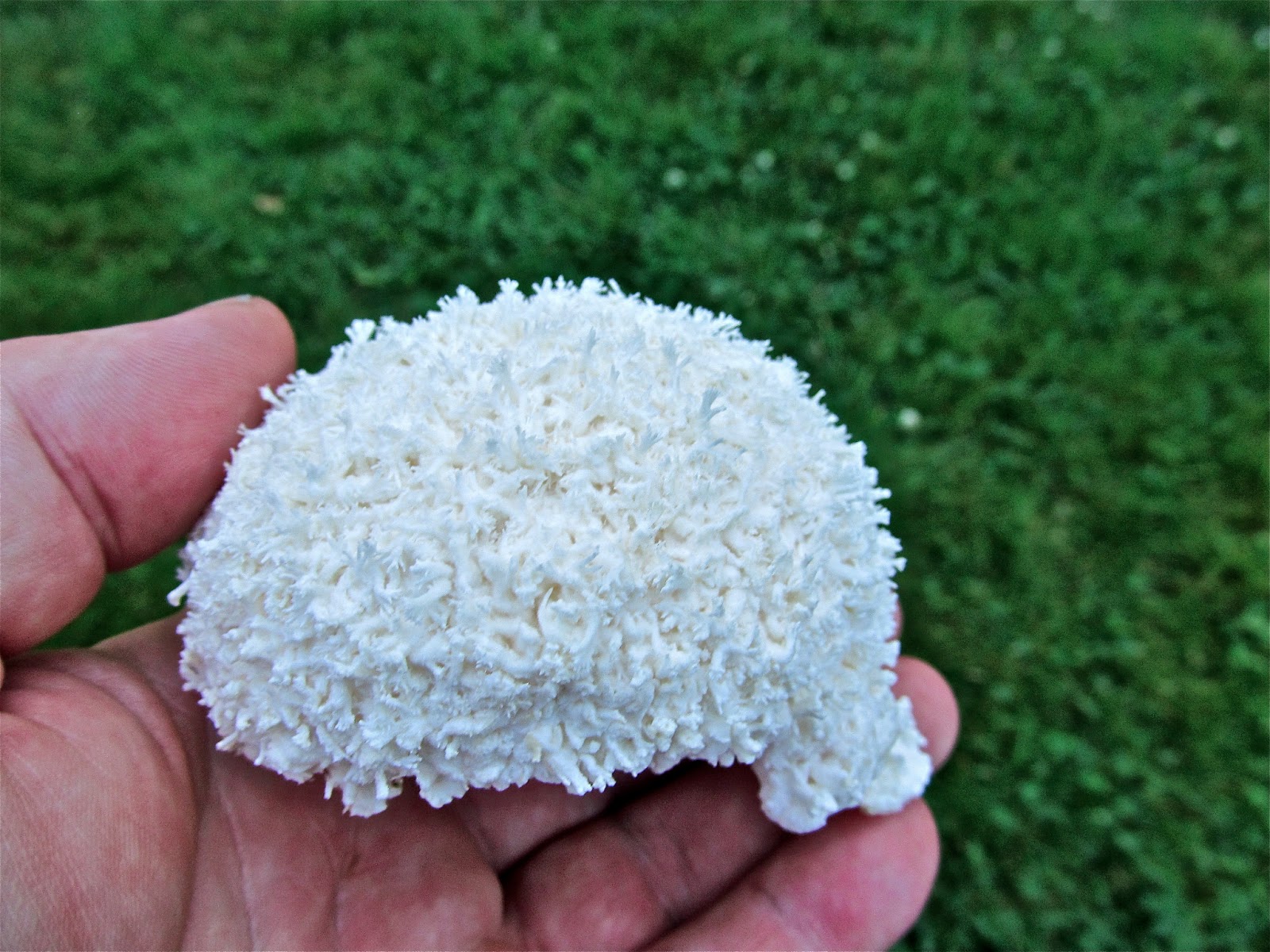
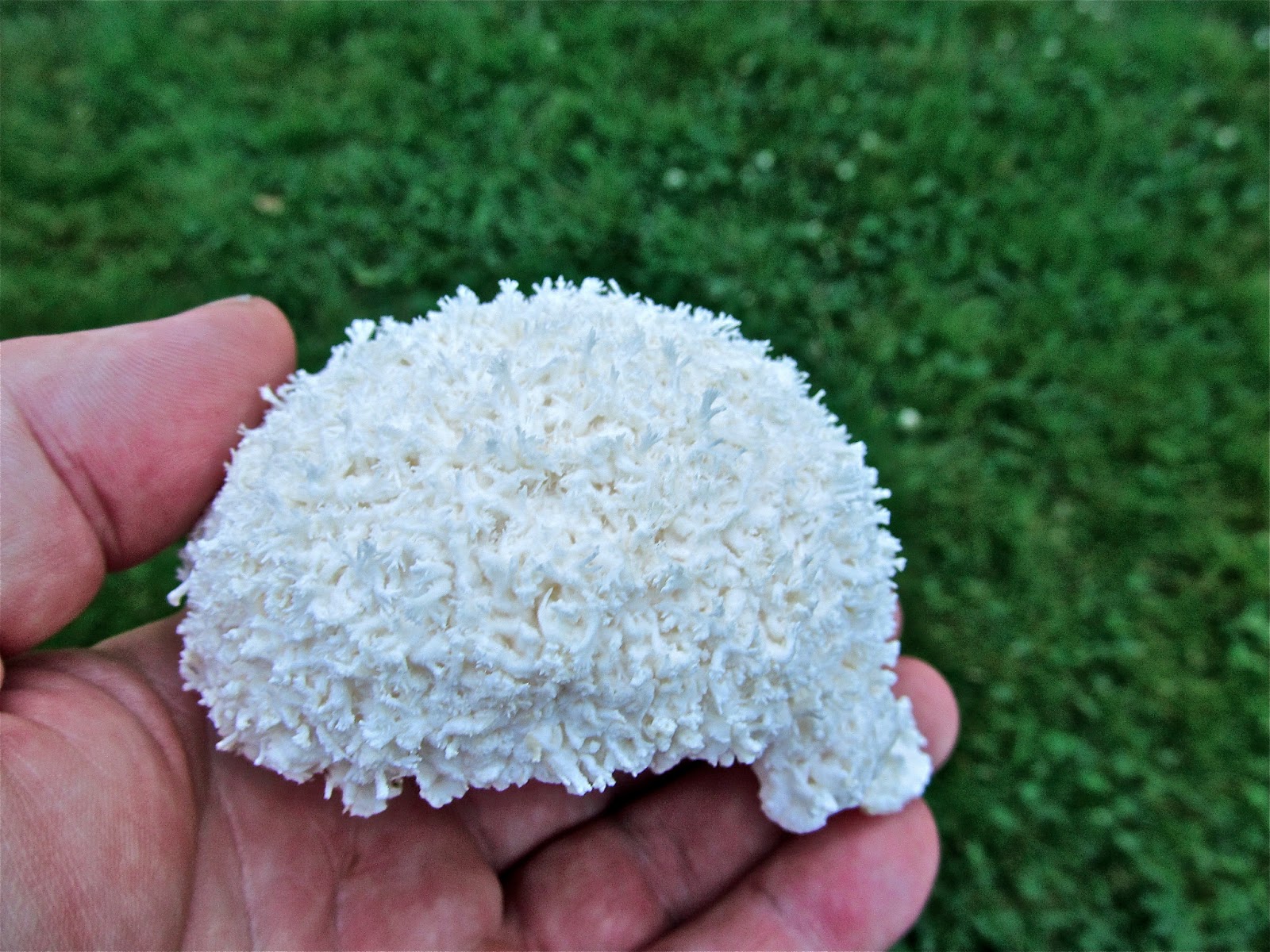
It goes fractal. More like sea-life than a lion's mane. There's still a core (the cut 'stem' at the center of this photo), but branches proliferate, more and thinner with each iteration.

After cutting them loose, I did what I do with most fung-food: sauteed with butter and garlic (or onion, shallots,...all alliums). Next time around, I'll try some other preparations. Those tendrils in broth would work like egg-drops in soup, weaving well with sprouts and delicate vegetables.

The center, or the whole mushroom if you follow instructions and pick it small, is meaty. To me, there was a chewiness beyond what portobello achieves, and I'd like to try using these for burgers. Slices in the sautee ended up more or less like meat. I'd use this in stir-fry in place of chicken--the texture was better than tofu or other mushrooms in that respect.

Sunday, June 23, 2013

Accidental Yum.

Somehow yesterday, I moved slowly at everything and allowed myself to become distracted so many times that it was nearly 10:00 before I got to cooking dinner. There were some potatoes sprouting eyes and begging to be eaten, a few hundred cc's of beans, and not a lot else. But at that point, culinary creativity and gustatory inspiration were far less important than filling my gut, and I set to cooking.

The beans only needed heating, so the first thing I did was dice the potatoes and throw them in a hot skillet with some oil. Every few minutes, some spatula action and maybe a toss or two to avoid the raw-on-one-side crispy-on-the-other syndrome. In between spatulations, I'd scatter some salt, grind some pepper, shake on some powdered garlic, or dump in some taco seasoning from Buck's (one of the few plug-links you'll ever find here--they are so good I suspend my fatwah against commerce here on the blog), an Olympia treasure. For some reason, I decided that a dash or two of cinnamon would be a good idea.

Even with the creative outlet of adding another spice at each turn, shallow-frying potatoes takes a while. During that while I decided that the increasing difficulty of scraping softened starch and a growing amount of spice-skudge, not to mention the desire to get the still crunch-raw tater-centers to cook, dictated a switch to braising. So I readied a couple cups of chicken broth, and let the potatoes sit and fry until on the brink of burning, then deglazed with the liquid.

As this came to a boil, I dolloped in some sour cream, and dropped in a handful of homegrown tarragon. As the sauce reduced, a couple of samples told me that this time, my near random addition of ingredients had worked. By the time it was thick, the potatoes were done.

I'd write a recipe, but none of the amounts were measured, and I've described the process. Now that it's posted, there's a fair chance that I won't forget this discovery, which is enough for me. If any of you try it, I'd be interested to hear how you like it.