Search Mocavore

Showing posts with label homegrown food. Show all posts

Friday, December 27, 2013

Cobbled-together Kimchi

Farmers Market Napa and Home-grown Daikon Greens

Late in the Fall, I finally got around to a couple of things. One was admitting that the daikon I planted was never going to make roots. Most of the summer planting bolted almost immediately, and the few plants that didn't never managed more than cracked, deformed, and undersized chunks underground. The second thing was realizing that I had a head and a half of napa cabbage yet un-used in the fridge.

So, kimchi.

There are plenty of recipes online, a suprising number of which make no sense. Some, because they are in Korean, which I do not read. Others, because they are in American, and are fake or wrong.

So I searched some more, and dredged up old emailed advice from a Korean friend of an Irish friend. This boiled down to: sweet rice flour is a good aid to fermentation, and you should use the greens you have.

Rinsing away the salt
So I stripped the greens off the straggling remnant of my failed daikon crop, a couple of stray mustard plants, and cut up the napa cabbage, then tossed it with kosher salt. Pressed out the liquid and rinsed repeatedly to get rid of (most of) the salt.

And so it begins.
Then I chopped in a mix of home-grown garlic and chilis (cayenne-ish, although NW peppers never seem to get as hot, and these were old), some store-bought dried ancho chilis (with their tobacco-raisin dimensions), and...maybe that's it. Except for the rice flour porridge, which I'm guessing is food to kick-start the microbes. Mexican anchos, Japanese rice flour, and bastard mustard may not be authentically Korean (also, I guess people used to fermenting in an onggi might look askance at my salvaged crock-pot), but somehow I imagined that using what was handy and seasonal would be acceptable to a fair proportion of Korean grandmothers, so I went with it.

The non-photogenic end result.

And before too long, I had the above. Not tongue-blisteringly hot, and oddly smoky due to the anchos, but tangy and tasty. These greens will not go bad, or be wasted. It's not bad, and that is good. It's probably even good for me. Hope so, because I've got a half gallon of the stuff. 

Wednesday, August 14, 2013

Land Tobiko - Poppy Roe


It's a little late to tell you now, but you can haz pappy roe. Like many esocteric gustatory treats, this treat is only available for a few weeks in any one place. This photo is a month or more old, and shows immature poppy seeds spilt 'pon yon plate. The green seed pod of the breadseed poppy (Papaver icannotrememberensis), can be split asunder to yield these seeds. In sushi or salad, or on top of a hotdog for that matter, the unripe seeds lend snap with a bitter crackle with a flowery aftertaste.

Leave 'em out, and they will begin to yellow and harden, and then it's too late.


The only way to eat these (other than blind-stupid early harvest) is to willingly sacrifice the promise of bagel or pastry with the black-seeded crunch of poppies. The pod cut open to free this caviar will not mature, cannot recover. Scoop out all the seeds and add them to whatever it is you have going that needs a light plantiferous crunch. There will be thousands, but not many.

You cannot buy this, and must grown it. A cold February casting seed. April thinning the progeny. June watching for the big-but-not-mature heads to offer up the bounty. Harvest only what you will eat within the hour. No prep time, but no shelf life either.

The unique snap of exocarp full of liquid so small in volume that it only regesisters as the snap against the skin. Like flying fish eggs - tobiko - this plantiferous roe gives the raw dish a crunch unlike almost anything else.


Saturday, July 27, 2013

Ozettes! (and Other Potatoes)


This has been a good garden year here so far, and mid-July brought with it a good harvest of potatoes. But I have a garden blog somewhere else, and it's the food that interests me here. Especially since this year was my first attempt at growing the Ozette potato.


Ozettes are what people call a 'fingerling' potato, mostly smaller than what you see here. This one has side sprouts, and looks as much like a Jerusalem artichoke as a potato. But that's the beauty of potatoes--a beauty hid from me for decades, growing up on nothing but Idaho Russets--that they come in so many shapes, sizes, and colors.

This variety gets's it's name from a place called Ozette, which also happens to be an archaeological site of huge significance. It's a site because Makah people lived there, and they've been growing these potatoes for centuries. Unfortunately, I don't have their origin story, but it's likely that Makah territory was one of the early landing points for the great Peruvian Potato Migration that spread tubers across the globe once Spanish ships started plying Pacific waters. But if the potato has not been here as long as the tribe, since time immemorial, it's been adopted by them for long enough to be a part of the culture now.

So yeah, it's a good variety for an archaeologist to grow, and it did well down here in the South Puget soils. And now that I have about 4 gallons of them, I'll get to try them in all sorts of ways. Ozettes, coated in olive oil and sprinkled with salt, roasted just short of crisp, chewy with a tough caramelized outer layer and a rich interior, mmmm. Simple can be best.

There's gold in them there hills.

The other varieties I grew this year were less interesting. Yukon Golds (above) were one of the first "other" potatoes available in regular American grocery stores of the late 20th Century, but to be honest the only reason I grew them was because I had some extra space and tubers that were sprouting. They're doing well, it seems like, but I haven't harvested them yet. When the time comes, they'll be the workhorse potato, boiled, mashed, roasted, whatever. Hopefully, they'll taste a little better for having been homegrown, but they're not exciting.

A basket of mascots.
The other kind of potato this year also came about as the result of profligate potato purchasing and the oversupply of aging tubers that follows for unambitious cooks like myself. This time, it was the only non-russet potato that I can remember way back into childhood: the Redskin. Yes, football fans, this is the way to use this word without being a racist asshole. I know, you don't want to walk away from your proud tradition (which has lasted, oh, not even 1/100th of the time Native people had their own traditions along the Potomac), and sports fans are not to be bullied by political correctness, but its mean and racist to keep calling your team that.

But yeah, redskin potatoes are fine. I'm looking forward to eating them. At least a few will go into sour cream and tarragon style potato salad. Tastes like summer.


And finally this year, there was a stealth russet, flourishing despite me. Potatoes actually came up unbidden last year from a previous renter's garden, but even though I hilled them up, they didn't produce. This year when it happened again, I ripped the shoots and thought no more. I did notice a survivor lurking among the raspberries, but didn't bother pulling it. Of course, I didn't bother helping it any, either, no weeding or hilling.

Then last week, because I wanted to clear some space for fall spinach, I did pull it out, and found about 7 pounds of potatoes hiding under the now luxuriant vine. I might not choose russets intentionally, but when a few meals worth drops in my lap, I'm grateful.

Now, all these potatoes (about 6 gallons and I have no idea how many pounds) are sitting in my archaeology screens in the garage, curing a bit before I stash them in the darkest coolest spot this hacienda has.

Saturday, July 13, 2013

Homegrown Lion's Mane


This Spring, I got a Lion's Mane mushroom kit at the farmer's market. It's a bag about the size of a fat gallon of milk, loaded with sawdust impregnated with mycelia. Having failed before, I tried a new set-up, consisting of a 5-gallon bucket with a rock in the bottom for the shroom-bag to sit on, just above an inch or two of water. Sitting on top of it all was my broad-brimmed field hat, holding in the humidity.

All you have to do is poke a few holes in the bag and set it in a humid place (well, you also need a certain amount of free airspace around the bag, and not too much water, heat, cold, light, or spores of more aggressive fungi, slimes, molds, and bacteria). When they reach baseball size, the instructions say, it's time to harvest. But I let one go to see what would happen, which turned out to be pretty interesting.


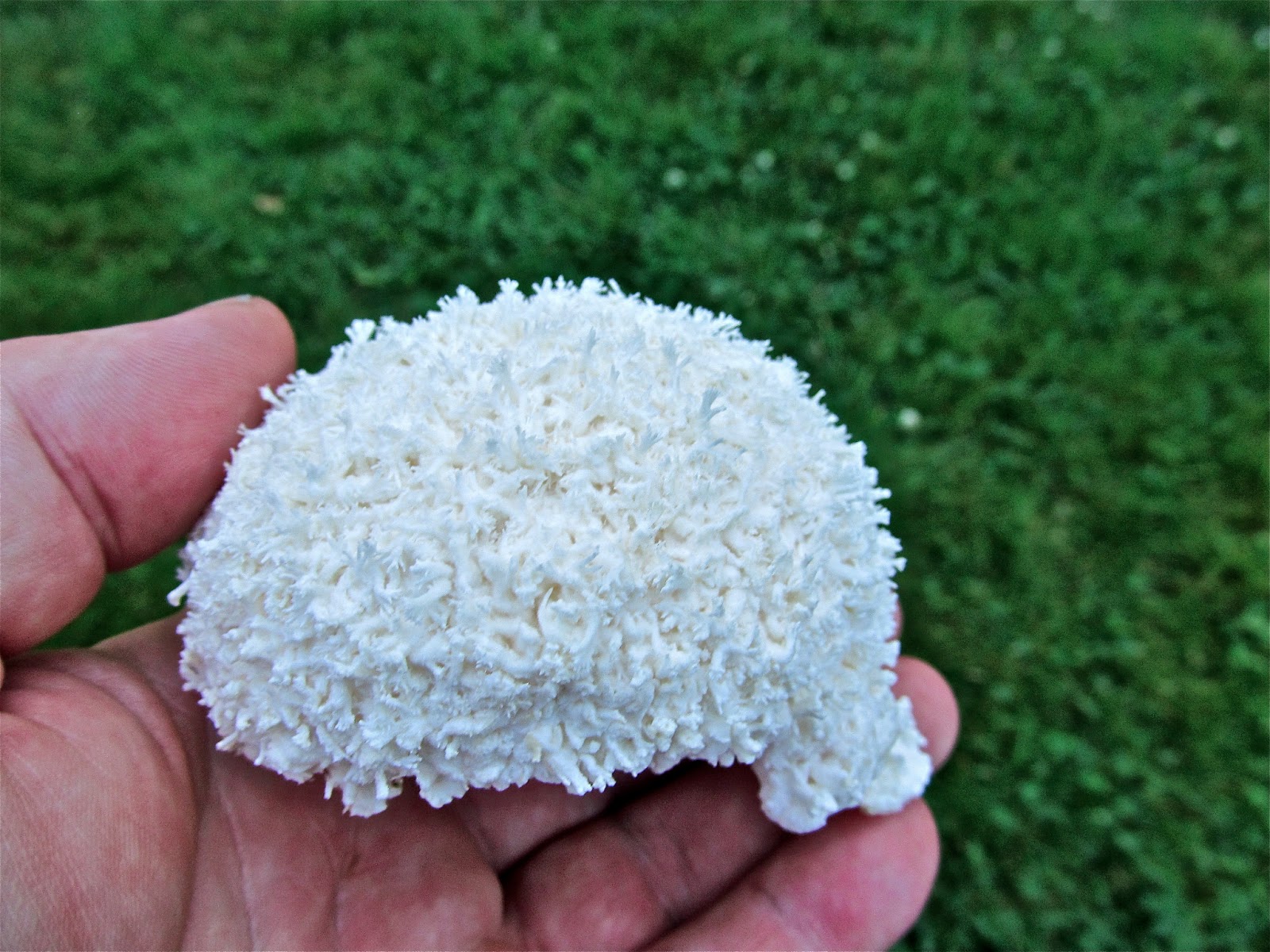
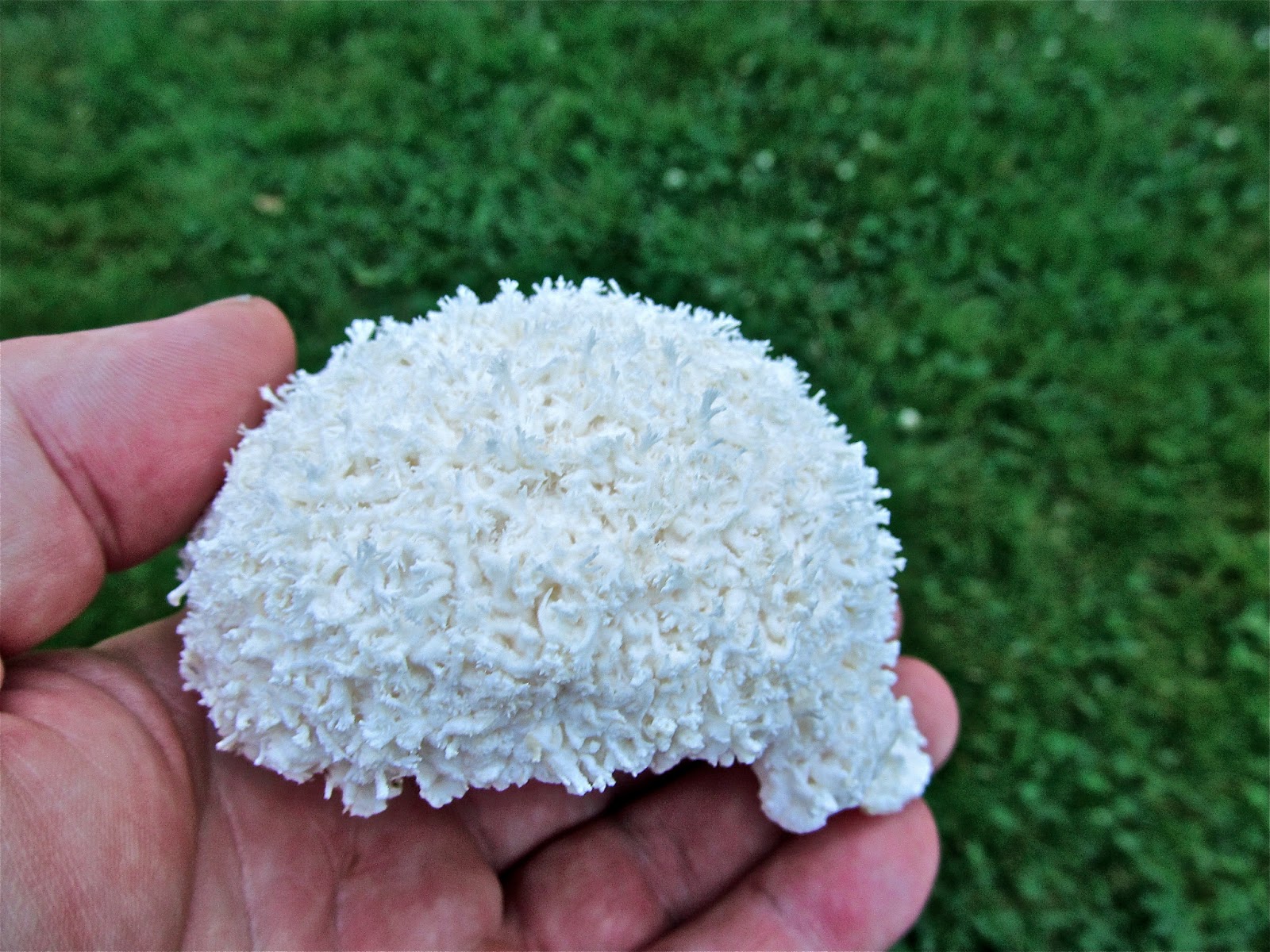
It goes fractal. More like sea-life than a lion's mane. There's still a core (the cut 'stem' at the center of this photo), but branches proliferate, more and thinner with each iteration.

After cutting them loose, I did what I do with most fung-food: sauteed with butter and garlic (or onion, shallots,...all alliums). Next time around, I'll try some other preparations. Those tendrils in broth would work like egg-drops in soup, weaving well with sprouts and delicate vegetables.

The center, or the whole mushroom if you follow instructions and pick it small, is meaty. To me, there was a chewiness beyond what portobello achieves, and I'd like to try using these for burgers. Slices in the sautee ended up more or less like meat. I'd use this in stir-fry in place of chicken--the texture was better than tofu or other mushrooms in that respect.

Sunday, February 3, 2013

Preserving Garlic*

Garlic Unclad

If you tuned into the Garlic Calendar, then you know that the cloves sense the Winter Solstice, and commence to sprouting, threatening your year's supply of homegrown flavor. But I'm such a procrastinator that I cannot follow my own advice, and it was only in the new year that I got around to peeling and storing the dozens of cloves that were sitting in the garage. Just these couple of weeks had the garlic doing this:


Hot erotic garlic, or just reproduction?

While they're starting on the new cycle that would birth a new plant, the cloves are not yet too far gone (besides, I kinda like the look of slices with the green circle in the center). But before the sprouts get as long as the cloves from which they spring, before the flesh gets soft, before pungent aroma becomes putrid regret, I need to somehow stop the process. In years past, this has been a matter of dropping peeled cloves into a jar and drowning them in olive oil. I did that again, but this time I'm trying a couple of other methods.

Salt and the earth.
Here's experiment #1. Good old fashioned salting. Pour pickling salt into a jar, put in a layer of peeled cloves, then bury them in salt, then more garlic, more salt,...you get the picture. The cloves are firm, and I did not irrigate, so I don't expect osmosis to create a saline slush, but it's an experiment. For reference, the majority of the cloves in the first photo and a bunch of salt filled a pint jar. I'll check back in later to let you know if this is a fail, but I suspect that what will happen is that the cloves stay intact, and I get a batch of garlic salt.

Experiment #2 is yet to be done. I had a bunch of large-cloved heads of garlic this year; some are elephant garlic, but not necessarily all. The plan is to roast them, smoosh the result, spread it out on parchment paper, and dehydrate it. I'm aiming for something like fruit leather, a hide of garlicky goodness that I can snip into strips or drop into the pot whole whenever I want that twice-roasted garlic flava.

Winter Morning Sun Dawns on Evening's Leavings

And then there's this, the old standby: cloves in oil. Chopped or pureed garlic tastes harsh and goes bad quicker. Drowning while cloves in oil and keeping them out of direct sunlight seems to halt the sprouting process. I'll remove the rubber gasket from the jar above so that the occasional fermentation fart can escape. In time, the cloves will soak up the oil and become beautifully translucent, edible amber. 

There are other ways to preserve garlic, but I don't like them (pickling? I just throw some in the cuke pickles I make, and that's plenty for my taste), or I don't know them. If you want to write in with others, I'll listen.

So if you have not yet dealt with your garlic, do it now! 

* [For whatever reason, it took me a month to think of my Greenstead post as food-ish, and post it here.]

Saturday, November 3, 2012

In the Pantry, 2012


Last Fall, I made a list of what I had canned. Some of it remains on the shelf, testament to the facts that I do not particularly like pepper relish and that there are limited uses for rose hip syrup. 

This year, I have these things:
18 quarts - tomato
17 quarts - dill pickles (4 from last year)
5 quarts - sweet pickles
4 quarts - sour (fermented) dills
1 quart - dill pickled beans
1 quart - dill pickled red cabbage
9 pints - pickled beets
7 pints - plum syrup (to be re-processed into jam)
4 pints - pepper relish
5 pints - blackberry jam
2 pints - strawberry jam
2 pints - marmelade
2 pints - smokes salmon
1 pint - serviceberry
1 pint - sauerkraut
1 pint - "hot jam" marmelade
1 pint - pineapple-mandarin marmelade
1 pint - pickled pimento
3 half-pints - rose hip syrup
2 half-pints - serviceberry
2 half-pints - cranberry sauce
1 half-pint - hot jam
1 half-pint - cranberry-blood orange marmelade 

In the freezer:
2.5 quarts - nettle
2 quarts - spot shrimp
2 gallons - hops

Sitting in boxes in the garage:
A few pounds of homegrown taters
A year's supply of homegrown garlic
A grocery bag of black moss
A smaller bag of homegrown tomatillos

On the herb shelf:
2 gallons - dried mint
1 quart - dried oregano
1 pint - dried thyme
1 half-pint - tarragon
1 half-pint - poppy seeds

This is not so different form last year, except that I obviously did not get to freeze a salmon, and I got a deal on beets. Also, I moved into fermentation, which reminds me that the list should include:
>1 sesqui-gallon of sauerkraut in the works, bubbling desultorily until it's time to jar it up. 

If I can get some Chinese cabbage at the farmers market, I may add kimchi to the list by year's end.

This year was no good for mushrooms, and I still didn't get a fishing license, so I don't see the larder getting any fuller. Circumstances did not allow a real garden this year, so mostly I canned stuff that other people grew. I am about as far from being self-sufficient as ever (which is to say, for garlic and oregano alone), but once again I can look forward to pickles and tomatoes fairly regularly without exhausting my stash. And probably kraut. 

Not sure in which way I will expand or experiment next year, but there's plenty of Winter yet to figure that out...

Wednesday, October 17, 2012

Cider Days


This week, I'll squeeze another batch of cider. I inherited a big press on my way out to Washington, an 1870s monument to cast iron and oaken framery that saved my life by weighing down the pickup bed across miles of Wyoming ice. 

Apples started dropping early and dry this year, but there are still trees laden with fruit still sweetening as the weather cools off. A neighbor let me pick from his tree, and I have two boxes sitting in the garage ready to go. Earlier, the first apple tree I ever planted yielded enough fruit for a half gallon of cider, and I got some more from a neighbor's windfall.

I'm not what you'd call real particular about the quality of fruit, but the windfall stuff has enough worms and incipient rancidity that it needs some surgery before making cider. Blemishes and outright ugliness don't matter, and old timers will tell you that some bruises are a good thing when it comes to cider. 

I wash all these pomological freaks in a galvanized tub, and then it's time to call in the help. Kids are perfect. I get the crank turning til the flywheel is spinning along nicely, and the little one starts tossing in apples to be crunchewed between teethy drums that spit bits drunkenly into and all around the bucket below. Immediately the air turns sweet, but for some reason this fall we were not beset by yellowjackets or bees.


A bucketful of chomped apples is now ready for the pressing. The long and increasingly difficult  turning of a giant iron screw that presses the apples while they sit in a slatted bucket on a slatted table. Juice flows out the sides and the bottom, hitting the drainboard and flowing into a container as the littler daughter makes sure nothing is lost. The bigger one uses a big ironwood stick to gain leverage, squeezing every last drop from the thinning wheel of apples crushed inside the bucket. Meanwhile, I sit back and enjoy a break. 

Someday, I'll get serious enough about hunting down apples (pay for them? perish the thought!) and gathering gear to make a big batch and ferment it. Or maybe not. But I'll always treasure fall afternoons with the girls doing cider alchemy, turning the ugliest apples into nectar, using brute force to craft delicate tastes.


Thursday, July 5, 2012

Strawberry Jam. So simple you should learn some Hawaiian while you make it.

Mmmm...splattery goodness. Maika'i

Back by the Chesapeake where I grew up, strawberries have long since been picked or baked by the unrelenting sun, but here in the Northwest, they're going strong. This year, I was lucky enough to get enough from the home garden to make a batch of jam without curtailing my daughters' grazing. Like most foods I really love, jam is pretty simple to make. So simple, that maybe you can learn some Hawaiian while you do it. Here's a dictionary to help you.

Dump the following into a big steel stock pot:
  • 11 cups  of  berries (hap-hazardly & half-heartedly smash 'em down prior to measuring, but whole-heartedly ku'i da buggas with a potato masher once they’re into the kettle)
  • 4.5 cups of sugar

I brought this up to a low boil while distracted by other tasks, so it coulda been done faster, but longer only means more time for everything to come all miko (your dictionaries tend to speak of salt with this word, but I've heard it used to convey the idea of something marinating, sitting together while flavors blend and soak through), which I think for jam means a better chance of it coming pa’a, and not all he’e.

Speaking of which, it was around this time that I added 
  • Pectin (powder kind) - 1 regular and 1 of supposedly no-sugar-needed [given my results, maybe you should add another]

Then I let it boil quietly for a little while longer, until one time when I took out the spoon, the sugar-red clung well enough, and I began putting out the jars.
Did I mention that I was sterilizing jars in the canner this whole time? No? Well I was, but not to turn around and plop them back in the boiling bath for processing. My grandmothers sealed strawberry jam with molten paraffin, using a can with a bent-rim spout to pour the wax onto the jarred jam; the can sits in a small pot of hot water, so that drips won’t burst into flame.

The yield is 7 pints, maybe a little less. There was not all that much foam to scrape off the post-pectin boil, and some jam managed to find its way onto the kettle, the jam-pouring big measuring cup, the spoon, the counter, my sweatshirt, and some other place that I will only discover weeks from today. So the yield would be a solid 7 pints to a cook whose frugality extends to actually being neat.

Now, 7 pints of jam is a pretty small amount, but it came from a 3rd-year patch of my own planting, so I’m pretty happy. A day’s easy picking from 27 square feet, give or take, mellowing and softening in the fridge for a couple of days, working toward miko, and now it’s jam. Not a bad small side project for a weekend.

How was this jam? A little he'e, to be honest, but I couldn’t be bothered to do more than throw in whatever pectin was at hand, and it didn’t end up as syrup, at least. A day in the fridge before serving helps, and it’s possible to make a sandwich with it, which satisfies the kids’ main criterion. If your own requirement is to have a thicker jam, the  find another recipe, or throw in another pack o pectin, and maybe more sugar,...whatever works.

The flavor, on the other hand, is ono. I have no idea what variety the berries are, but they are medium sized, and red to the core, no pulp, all juicy. Mmmm. If you’ve been comparing recipes, you’ve noticed that I don’t use as much sugar as some people, because my tongue likes a tang, but it’s plenty sweet.